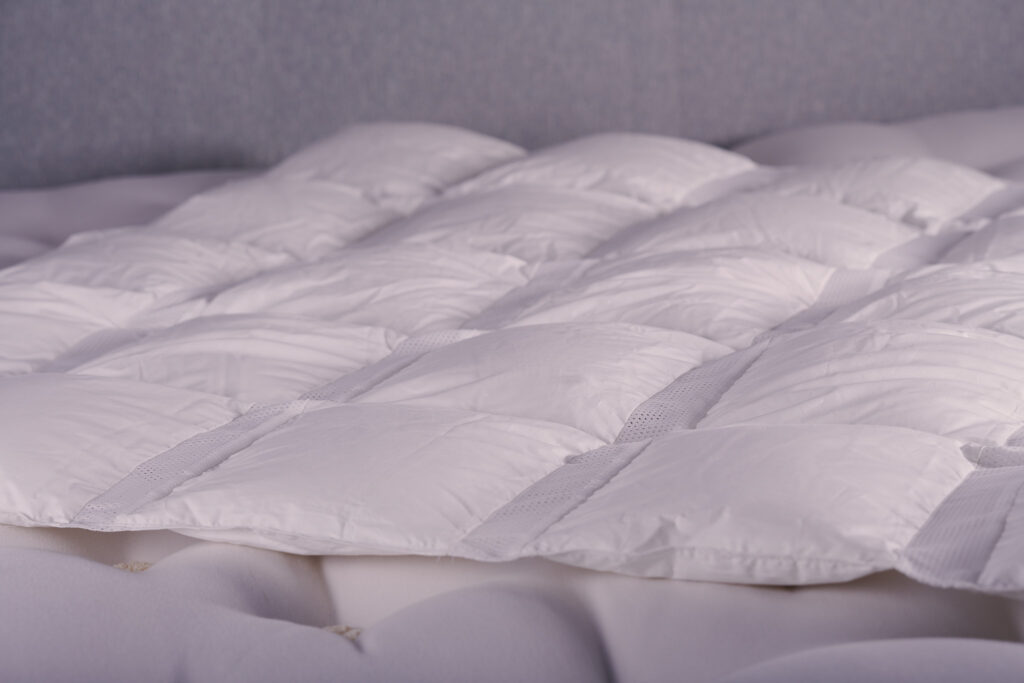
How do you attach a mattress topper to a mattress?
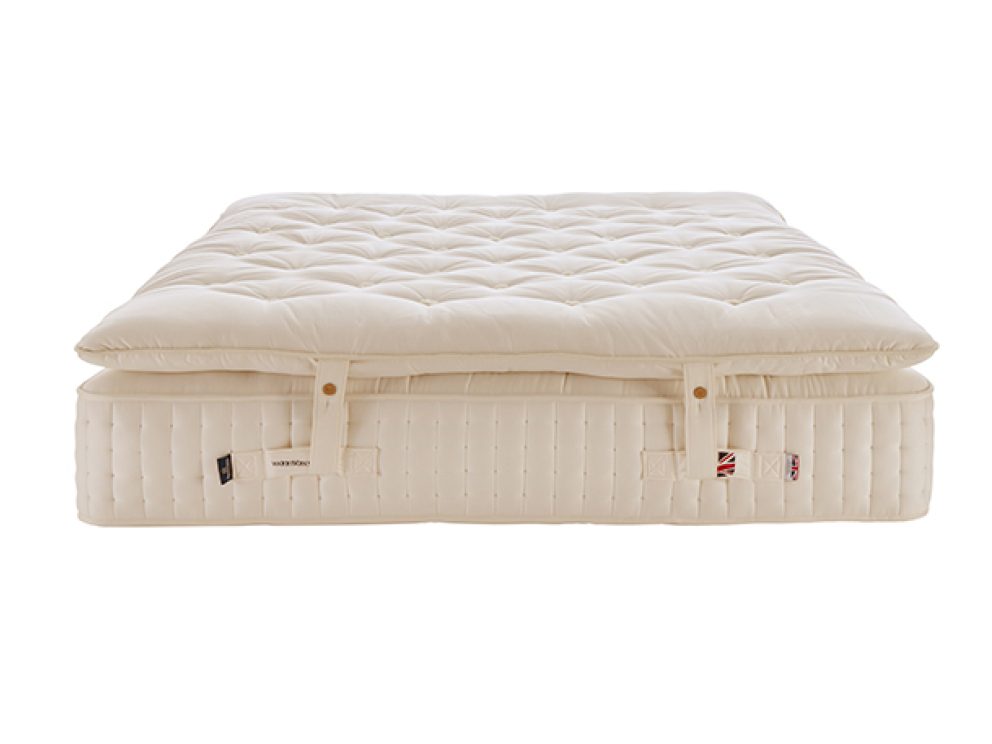
The best way to secure a mattress topper to your mattress is to use a fitted sheet that covers both layers, combined with a non-slip underlay between the topper and the mattress. For extra stability, you can use elastic straps or special topper clips that attach all around the mattress. In this article, you’ll learn exactly which method works best for your situation and how to prevent your topper from sliding around.
Why does a mattress topper actually slide off your mattress?
A mattress topper glides along mainly because of the combination of smooth materials and your natural movements during the night. Modern mattresses often have a smooth cover, and mattress toppers usually have a fairly smooth finish on the underside as well. Every time you turn over or shift position, the topper glides along with you just a little bit.
The material of your mattress topper also plays a role. Synthetic materials like polyester slide over each other more easily than natural fabrics. Cotton and wool naturally provide more grip. Size is also important: a topper that’s just a little too small for your mattress has less grip and is more likely to slip.
Your mattress's ventilation affects how much it shifts. A mattress that breathes well and allows air to circulate often has a smoother surface. This is good for your sleep environment, but it can cause a mattress topper to shift more easily. With mattresses that retain a lot of moisture or sweat, the problem can sometimes be even worse, because damp layers become extra slippery.
What are the different methods for securing a mattress topper?
The most common method is to use a fitted sheet that covers both the mattress topper and the mattress. Measure the total height of both layers together and purchase a fitted sheet with enough tuck-in length. This keeps everything in place without requiring any additional materials. It works best with mattress toppers up to about 8 centimeters thick.
Place a non-slip mat or underlay between your mattress and topper. These mats are made of rubber or silicone and provide traction between the two layers. They come in various sizes and can be easily cut to fit. This solution works well if you can’t find a fitted sheet that fits or if your topper is very thick.
You secure elastic straps or belts around your mattress and topper, acting as a kind of tensioner to hold everything together. They usually have clips or buckles at the ends and are arranged in a crisscross or rectangular pattern around the bed. This system is especially useful for very thick toppers or if you move around a lot while sleeping.
Special topper clips or corner fasteners clip into the corners of your mattress. They grip both the topper and the mattress, keeping both layers in place. These clips are especially suitable if you have a mattress with a firm edge to which you can securely attach them.
Double-sided fabric tape is a quick fix for smaller mattress toppers. Simply place strips of tape between the mattress and the topper, preferably along the edges and in the center. Please note: this works best for toppers that you don’t plan to move or wash often, since you’ll need to replace the tape each time.
How do you choose the right fitted sheet for a mattress with a topper?
First, measure the total height of your mattress and topper together. Take a measuring tape and measure from the bottom of your mattress to the top of your topper. Add at least 10 centimeters to that for the tuck-in height under your mattress. If your mattress is 20 centimeters high and your topper is 5 centimeters high, you’ll need a fitted sheet with a tuck-in height of at least 35 centimeters.
The tuck-in length is the part of the fitted sheet that tucks under your mattress. If the tuck-in length is too short, the sheet won’t stay in place properly and your mattress topper may still shift. If the tuck-in length is too long, that’s not a problem—you can simply tuck it a little further under your mattress.
The material of your fitted sheet also determines how well it stays in place. Cotton fitted sheets naturally stay in place better than smooth satin sheets. Jersey cotton is extra stretchy and conforms well to the shape of your mattress and topper, keeping everything snugly in place. Satin feels luxurious but is smoother and offers less resistance to slipping.
Be sure to measure your mattress for both length and width. Fitted sheets come in standard sizes, but if you’re unsure, it’s best to choose a size larger. A fitted sheet that’s too tight will pull your mattress topper up at the edges, causing the center to shift. A well-fitting sheet should be snug but not too tight, so that both layers stay securely in place.
What can you do if your mattress topper keeps sliding around even with a fitted sheet?
Try placing an anti-slip underlay between your mattress and topper. A rubber mat with an open-cell structure often works best because it provides grip while still allowing for ventilation. Silicone grip pads are thinner and work well with mattresses where ventilation is important. Place the mat completely between the two layers for maximum grip, or use strips along the edges if you don’t want to obstruct ventilation.
To set up an elastic strap system, place the straps across your bed in a crisscross or rectangular pattern. Start at the bottom of your mattress, drape the straps over the mattress topper, and snap them into place on the other side. Make sure the straps are tight enough to keep everything in place, but not so tight that they dig into your mattress or topper. Check the straps regularly to make sure they haven’t worn out.
The surface your mattress rests on also plays a role. A box spring with wide slats provides more grip than one with narrow slats or a flat panel. If your mattress is on a slippery surface, the entire bed may start to slide. If necessary, place a non-slip mat between your mattress and the bed frame.
Sometimes the problem can’t be solved with accessories. If your mattress topper is too old, the material may have lost its elasticity. A mattress that has developed indentations or no longer ventilates properly also makes it difficult to secure a topper. In that case, it’s wise to look for a new mattress that better suits your needs. A mattress with a natural, breathable cover and good support often keeps a topper in place better than a worn-out or slippery mattress.
At Bröring, we’re happy to help you find the right combination of mattress and topper. We take the time to assess your sleeping situation and advise you on materials and solutions that are truly right for you. This ensures that your topper stays in place and that you sleep comfortably every night.

Top service!
About four years ago, I bought a beautiful bed at Broring, Gelderlandplein. Stephan helped me.
I lived nearby.
Now that I've moved in with my partner and live in Bloemendaal, I was having problems with the bed's controls.
My boyfriend contacted Broring about this many times by phone and email. When that didn't work, Stephan came by to fix it!
We thought that was great service because I no longer live in Buitenveldert, so I'm not next door!
I was also helped in the store by a somewhat older person, blond/gray hair, glasses, who was always very friendly!
The quality of the items, including sheets, towels, etc. in the store is also very good.
I Beker